How to Choose the Right Injection Machine Robot for Your Needs?
Choosing the right Injection Machine Robot can significantly influence production efficiency. These robots automate tasks, enhancing consistency and reducing labor costs. However, selecting the ideal robot is not straightforward. Various factors must be considered to meet specific needs.
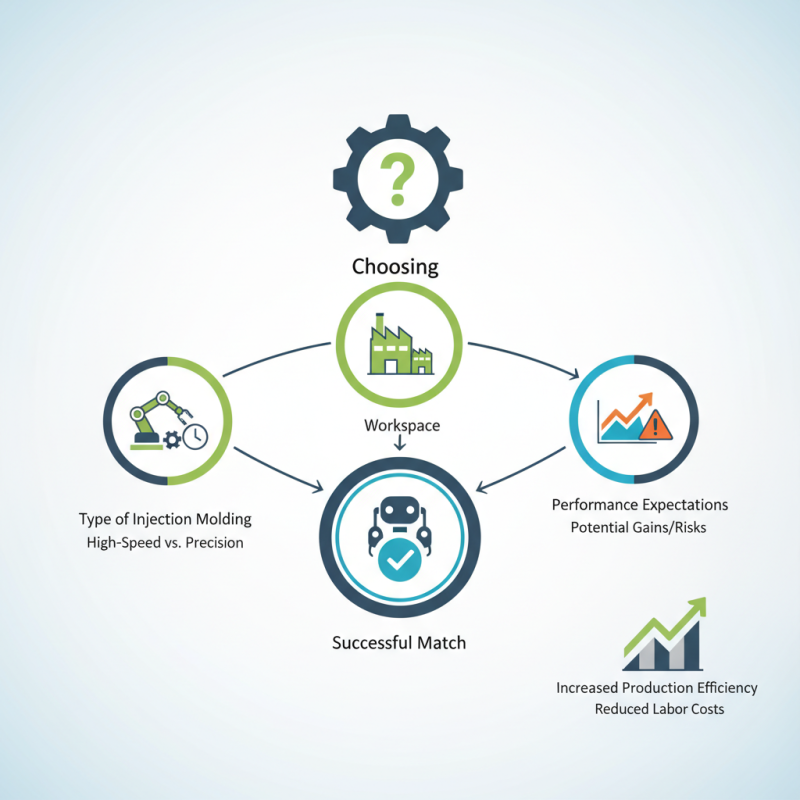
When evaluating options, think about the type of injection molding used. Different machines have unique capabilities. For instance, some robots excel at high-speed tasks, while others may focus on precision. Assessing your requirements is crucial. A mismatch may lead to inefficiencies.
It’s also vital to consider the workspace. The size of your factory can impact your decision. A larger machine might not fit comfortably in smaller areas. Performance expectations should be realistic. Investing in advanced technology offers potential gains but comes with risks. Reflect on your operations before choosing.
Understanding the Types of Injection Machine Robots Available Today
When selecting an injection machine robot, understanding the various types available is essential. There are mainly three types: Cartesian, SCARA, and six-axis robots. Each serves unique purposes in injection molding processes. Cartesian robots excel in linear movements and are cost-effective. They are ideal for simple, repetitive tasks. SCARA robots offer faster speeds and can handle complex tasks efficiently. The six-axis robots, however, provide flexibility and can perform on multiple planes, making them versatile for various applications.
Industry reports indicate a significant trend in automation. Approximately 70% of manufacturers are transitioning to robotic solutions for efficiency. The demand for six-axis robots has surged by 30% in the last few years. This reflects a shift towards robotics that can adapt to complex production demands. While Cartesian robots may be less expensive, they lack the adaptability of other options. This gap is critical for companies aiming for growth and efficiency.
However, not every choice is perfect. Organizations may invest in a high-end six-axis robot but not fully utilize its capabilities due to a lack of training. Furthermore, maintenance costs can be higher, which some businesses often overlook. Evaluating these factors is essential for making an informed decision when choosing the right injection machine robot.
Assessing Your Production Needs and Application Requirements
Assessing production needs is crucial when selecting an injection machine robot. Start by considering your output requirements. For instance, a factory aiming for 1,000 units per day will need a different machine than one producing 5,000 units. According to industry reports, nearly 70% of manufacturers note that high-speed robots can reduce cycle time significantly. This directly impacts productivity levels.
Next, application specifics play a vital role. The type of materials used in injection molding can dictate the robot's design and features. For instance, handling delicate plastics requires precision in the robot’s movements. Data shows that 55% of production failures stem from inadequate compatibility between the robot and the materials. Thus, understanding your material handling needs is essential.
User feedback reveals that many manufacturers overlook the importance of flexibility. A robot capable of handling multiple tasks can adapt to changing production needs. This adaptability is key in today’s fast-paced market. Investing in a versatile machine may incur higher initial costs, but it can pay off in long-term operational efficiency. Reflect on your long-term goals and how a robot fits into those plans.
How to Choose the Right Injection Machine Robot for Your Needs?
| Parameter | Description | Example Value |
| Payload Capacity | The maximum weight the robot can handle | 5 kg |
| Reach | The distance the robot can extend its arm | 1.2 meters |
| Speed | The rate at which the robot can move | 100 mm/s |
| Precision | The accuracy of the robot's movements | 0.1 mm |
| Control System | Type of software used to operate the robot | PLC Integrated |
| Operating Environment | Conditions in which the robot will operate | Clean Room |
| Application Type | Specific tasks the robot will perform | Injection Molding |
| Integration Capability | Ease of connecting with other machines | High Compatibility |
Evaluating Key Features and Specifications for Selection
When choosing an injection machine robot, evaluating key features is essential. Start with payload capacity. This determines how much weight the robot can handle. A higher payload allows for versatility. Next, consider speed and precision. Some applications require quick and exact movements. Others may prioritize strength over speed. Finding the right balance depends on your production needs.
Another crucial aspect is the range of motion. A robot with a wider range can access difficult areas. This flexibility might reduce cycle time and boost efficiency. Then, look at the control systems. User-friendly interfaces simplify operation and programming. It reduces training time for staff. However, some advanced features may complicate basic tasks.
Also, think about maintenance and support. Regular maintenance is needed for longevity. Some machines require more upkeep than others. It’s often uncertain how well they perform over time. Evaluating these areas can help you make a more informed decision. Consider your specific needs carefully. Cheap is not always better. Inflexibility may lead to future regrets.
Considering Budget and Cost-Effectiveness in Your Decision
Budget considerations are crucial when selecting an injection machine robot. Costs can vary significantly among different models and features. Buyers often face tough choices. A lower initial cost might save money upfront. However, it may lack essential capabilities or durability. This trade-off must be assessed carefully.
Consider the long-term implications of your investment. Maintenance costs adding up may eat into savings. Robots requiring frequent repairs can become a significant burden. Be wary of features that might seem appealing but have little impact on productivity. Determine what will truly enhance your operation. Consulting with industry experts can provide valuable insights.
Evaluate your production volume and the complexity of tasks. Different applications may demand varied robotic capabilities. Investing in high-tech features for simple tasks could lead to wastage. It's wise to ask if such features are genuinely necessary for your operations. A well-thought-out decision today can prevent regret tomorrow.
Researching Manufacturers and Gathering User Reviews for Insight
When selecting the right injection machine robot, user reviews and manufacturer research are key. Begin by exploring online forums. These platforms provide user insights on different models. Look for experiences that highlight both strengths and weaknesses. A single positive review may not tell the full story. Customers often share specific issues, such as maintenance challenges or software glitches.
Consider the manufacturers' reputation. A reputable company may seem reliable at first. However, not all well-known brands deliver top-notch support. Read reviews that discuss customer service interactions. Did users feel supported during troubleshooting? Were parts easily accessible? Questions like these reveal important details about the company and its products.
Pay attention to feedback on performance. Some robots might struggle with speed or precision under certain conditions. Users often mention real-world scenarios that testing may not cover. This feedback helps identify potential limitations. It’s crucial to reflect on these points before making a final decision.