How to Choose the Right CNC Turning Center for Your Shop?
Choosing the right CNC Turning Center for your shop is crucial. It can shape your production capabilities and improve efficiency. Numerous factors play a role in making this decision.
CNC Turning Centers come in various sizes and functionalities. Think about your shop's specific needs. What parts will you produce? Will you need large or small turns? It's essential to analyze your production volume as well. Sometimes, shops overlook the importance of scalability. A machine that fits today may not meet future demands.
Additionally, budget constraints often cloud judgment. Investing in a high-quality CNC Turning Center may seem daunting. Cheaper alternatives might seem appealing, yet they often lack the durability and precision needed for high-quality outputs. Reflecting on machine maintenance and support is equally important. These details directly affect your productivity and shop success. As you ponder these aspects, remember that an informed choice leads to better outcomes.
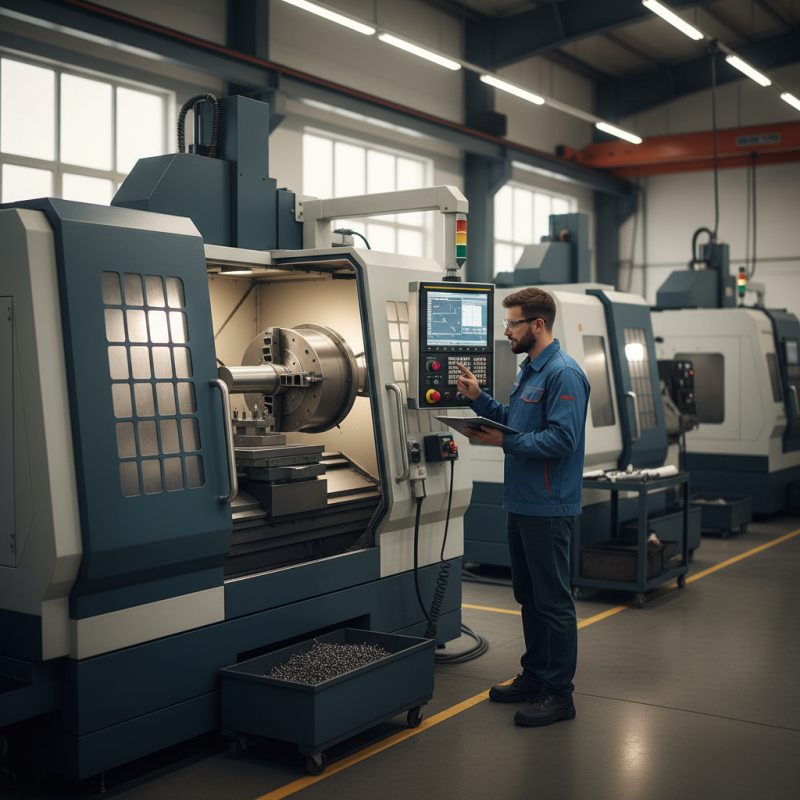
Key Considerations for Selecting a CNC Turning Center
When selecting a CNC turning center, several key factors come into play. The size and complexity of the components you'll be machining are crucial. A higher capacity machine can handle larger parts but may not be necessary for small-scale operations. According to industry reports, around 40% of shops regret not considering their workpiece dimensions more thoroughly.
Tips: Consider calculating the maximum length and diameter your parts will require. Choose a machine that offers a bit more capacity than your current needs.
Another vital consideration is tooling compatibility. A turning center may come with specific tooling options, impacting setup time and costs. Data shows that shops using versatile tooling systems often achieve a 25% increase in productivity. Ignoring this can lead to significant downtime and material waste.
Tips: Review your current tooling inventory. Ensure that your new CNC center aligns with your existing tools for seamless integration.
Lastly, think about the ease of use and programming. Many operators struggle with complex software. A user-friendly interface can significantly reduce training time. Around 30% of operators express frustration over complicated systems. Choose a machine that offers intuitive controls to enhance your workflow.
Understanding the Different Types of CNC Turning Centers
When selecting a CNC turning center, understanding the types available is crucial. There are generally three main categories: horizontal, vertical, and multitasking CNC machines. Each type serves specific purposes in a shop’s workflow. According to a recent industry report, the demand for horizontal CNC turning centers is expected to grow by around 15% annually. This increase highlights their efficiency in handling larger parts.
Horizontal centers often require more floor space. They excel in high-volume production settings and typically have more advanced tooling options. Meanwhile, vertical turning centers are better for smaller parts and intricate designs. These machines can occupy less space and reduce setup times. However, they might not match the output of their horizontal counterparts.
Multitasking CNC turning centers combine turning and milling capabilities. They represent a significant investment but offer versatility. In some cases, shops can reduce processing time by 30% when using these machines. Still, not every shop needs such capabilities. Budget constraints and specific production needs should guide decisions. The choice of a CNC turning center isn't straightforward and requires careful consideration of various factors.
How to Choose the Right CNC Turning Center for Your Shop? - Understanding the Different Types of CNC Turning Centers
| Type of CNC Turning Center | Key Features | Ideal Application | Price Range (USD) |
| Standard CNC Turning Center | Basic capabilities, often with 2 axes, suitable for simple turning operations. | Small to medium-sized parts, prototyping. | $20,000 - $50,000 |
| Live Tool CNC Turning Center | Includes live tooling for milling and drilling operations. | Complex parts requiring additional operations without moving to another machine. | $50,000 - $100,000 |
| Multifunction CNC Turning Center | Capable of multiple processes including turning, milling, and grinding. | High-volume production and highly complex parts. | $100,000 - $200,000 |
| Swiss-style CNC Turning Center | Designed for high precision and small diameter parts. | Medical devices, precision instruments. | $80,000 - $150,000 |
| CNC Lathes | Specialized lathes commonly used for large, heavy components. | Oil and gas, construction machinery. | $70,000 - $150,000 |
Evaluating Size and Capacity Requirements for Your Shop
Choosing the right CNC turning center is critical for optimizing your shop's efficiency. Evaluating size and capacity is a fundamental step in this process. First, assess the types of materials and components you work with. Larger components require more space and a capable machine. Do you often process small intricate parts? You may need a different specification.
Think about your shop’s layout. Is there enough room for a larger machine? Space constraints can affect your decision. Also, consider power supply needs for various CNC machines. Some machines consume more energy than others. This factor can influence your operating costs.
Anticipate future growth. Will your projects expand in size or complexity? It might be wise to invest in a machine with extra capacity, even if it feels like overkill now. Flexibility is key to adapting to changing demands. Reflect on your current production volume. It’s easy to underestimate your needs. A machine that's too small can lead to workflow bottlenecks. Balancing current capacity with future potential is essential.
Assessing Technology Features and Capabilities in CNC Machines
When selecting a CNC turning center, technology features play a crucial role. Different machines offer varying capabilities. For example, consider spindle speed and torque. Higher speed can lead to better finishes, but not every job requires it. Your shop's needs should dictate this choice.
Customization options matter as well. Some machines allow for easy upgrades. Others may feel limited over time. Think about future projects. Will your turning center adapt? Look at automation features like part loading. Increased efficiency can justify a higher initial investment.
Consider the control systems too. User-friendly interfaces can enhance productivity. Yet, a more complex system may offer advanced functions. Balancing complexity with usability is key.
Take time to research and reflect. What works best for your shop today may not suit your needs tomorrow. Each choice brings its own set of challenges. Understanding these aspects can lead to a more informed decision.
Comparing Costs and Budgeting for Your CNC Investment
Choosing the right CNC turning center involves understanding costs and budgeting. It's not just about the machine price. Maintenance fees can add up. Training workers on new equipment is essential too. You may also need extra tooling and software.
Many shops underestimate depreciation. A CNC machine's value decreases over time. Factor this into your budget. Consider the production capacity. Higher capacity may cost more initially but could save money in the long run. Evaluate whether leasing can be a better option for cash flow.
Hidden costs can be a nightmare. Shipping fees, installation, and setup may surprise you. Research and get quotes beforehand. Work with your finance team to create a realistic budget. If your calculations feel off, revisit them. Make sure your shop can sustain the investment. Only then should you proceed.
Comparison of CNC Turning Center Costs and Features