How to Choose the Best Mobile Robots for Your Business?
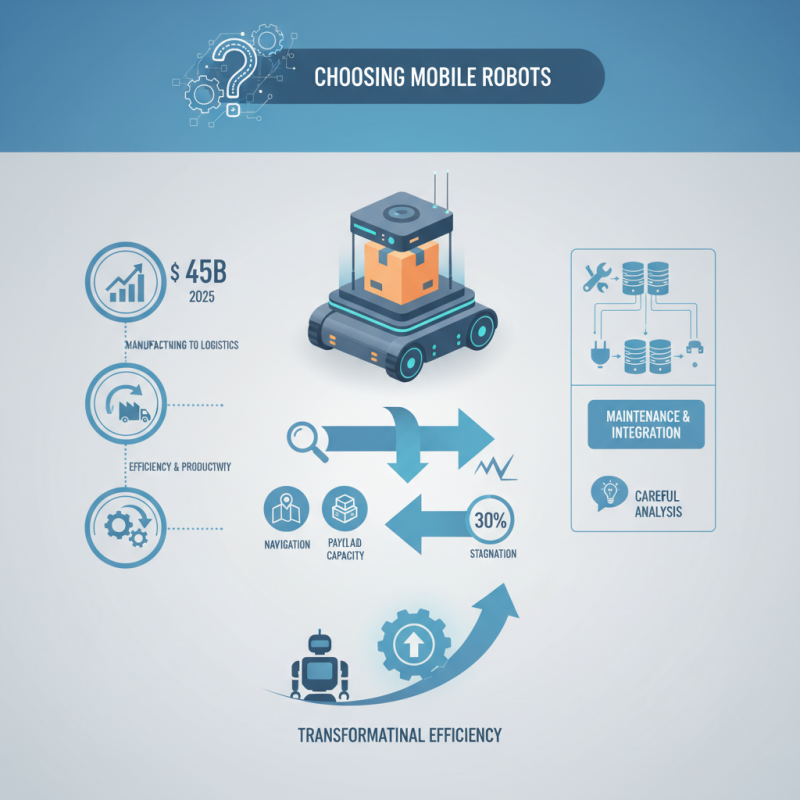
In today's fast-paced business environment, choosing the right mobile robots is crucial. Industry reports indicate that the mobile robotics market is projected to reach $45 billion by 2025, highlighting its growing importance. These robots enhance efficiency and productivity across various sectors, from manufacturing to logistics.
However, the selection process can be complex. Companies must evaluate their unique needs against the capabilities of different mobile robots. For instance, some robots excel in navigation, while others focus on payload capacity. Understanding these nuances is essential to make informed decisions. Data shows that businesses using mobile robots can reduce operational costs by up to 30%, yet improper choices may lead to stagnation.
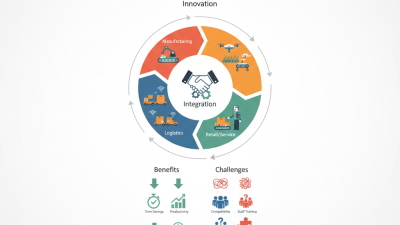
Furthermore, organizations must consider maintenance and integration with existing systems. Not every mobile robot is a perfect fit for every business model. This necessitates careful analysis and continuous reflection. Ultimately, leveraging mobile robots can transform operational efficiency, but only if selected wisely.
Understanding the Unique Needs of Your Business for Mobile Robots
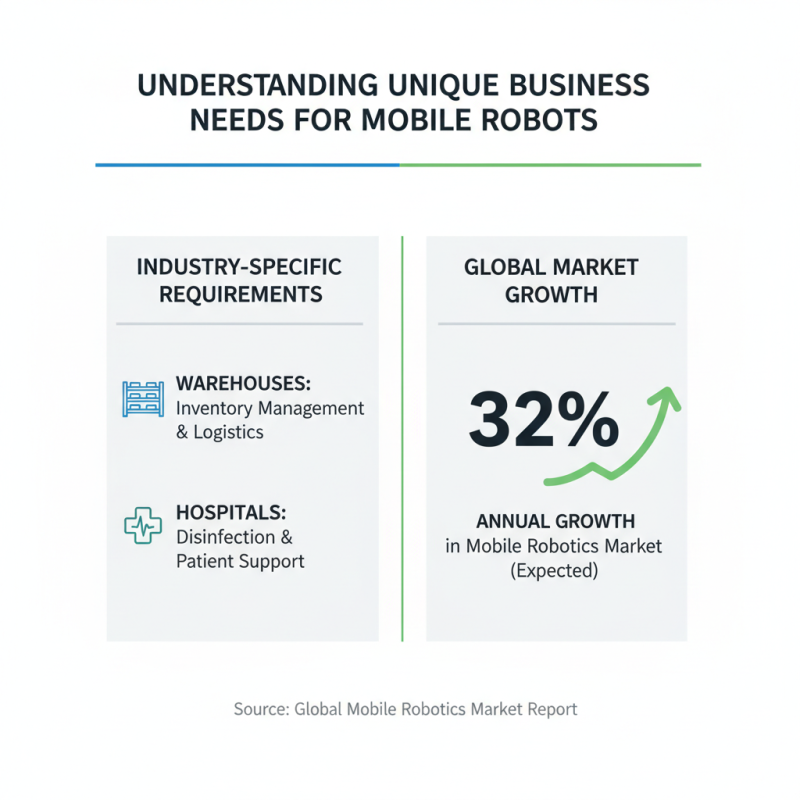
Understanding the unique needs of your business is crucial when selecting mobile robots. Each industry has specific requirements. For instance, warehouses may need robots for inventory management, while hospitals may prioritize disinfection capabilities. The global mobile robotics market is expected to grow by 32% annually, showing how critical these technologies can be.
It’s essential to conduct a thorough needs assessment. This involves identifying tasks that can be automated. For instance, a study indicated that 46% of logistics companies utilize robots to reduce labor costs. However, many businesses struggle with integrating these systems. Lack of compatible infrastructure can hinder performance.
Gather input from your team. Their experiences will reveal gaps in current operations that mobile robots could address. Balancing technological integration with human workflows is vital. While robots can increase efficiency, they can also lead to job discontent if not implemented thoughtfully. Understanding these dynamics will guide your decision-making process.
Evaluating Different Types of Mobile Robots for Specific Applications
When evaluating different types of mobile robots, it’s essential to consider specific applications. Each robot type is designed with unique features. For example, some robots excel in warehouse logistics, while others are built for healthcare environments. Understanding these nuances helps in selecting the right technology.
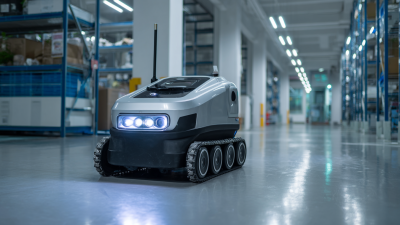
In warehouse settings, autonomous mobile robots simplify the picking and packing process. They navigate through complex layouts and avoid obstacles efficiently. However, they may struggle with uneven surfaces, which can limit their effectiveness. In healthcare, robots assist in delivering medications and equipment. While they are reliable, their interaction with staff and patients is often minimal. This could affect the overall efficiency.
Consider the key factors: load capacity, navigation methods, and battery life. But remember, no robot is perfect. Early experiences may reveal unexpected challenges. Regular feedback from users helps in optimizing operations. Finding the best mobile robot requires continuous evaluation and adaptation to specific needs.
Assessing Key Features and Specifications of Mobile Robots
When selecting mobile robots for business, it’s crucial to assess key features and specifications carefully. Recent industry reports highlight that 85% of businesses using mobile robots see increased efficiency. The payload capacity is a vital specification. Robots that can transport up to 100 kg are ideal for warehouse operations. However, if your operations require moving heavier loads, you may need to look at specialized models.
Navigation and obstacle avoidance are also critical features. Companies report that systems with advanced sensor technology reduce collision rates by 30%. This enhances safety in busy environments. Battery life deserves attention too. Short battery life can disrupt operations. Most robots now offer between 8 to 12 hours of runtime, but some models may fall short, requiring regular recharging. It’s essential to balance the need for speed with endurance.
Don’t overlook the integration capabilities of mobile robots. Reports suggest that businesses struggle with robots that cannot interact with existing systems. Consider how the robot communicates with your management software. A robot that can't easily integrate may lead to operational inefficiencies. Always evaluate real-world feedback and case studies. They provide insights into the strengths and weaknesses of different technologies. Choosing the right mobile robot is more than just specs; it’s about aligning with your specific operational needs.
How to Choose the Best Mobile Robots for Your Business? - Assessing Key Features and Specifications of Mobile Robots
| Feature |
Specifications |
Use Case |
| Navigation System |
LIDAR, Vision, GPS |
Indoor/Outdoor navigation |
| Payload Capacity |
50 kg - 200 kg |
Delivery, logistics |
| Battery Life |
4 hours - 12 hours |
Autonomous operations |
| Speed |
0.5 m/s - 2 m/s |
Transporting goods |
| Communication |
Wi-Fi, 4G, Bluetooth |
Remote monitoring and control |
| Obstacle Avoidance |
Ultrasonic, Infrared |
Safe operation in dynamic environments |
| Price Range |
$10,000 - $100,000 |
Budget planning for acquisition |
Considering Budget and ROI When Selecting Mobile Robots
When selecting mobile robots for your business, budget and return on investment (ROI) are crucial factors. A recent report from Market Research Future indicates that the mobile robotics market is projected to grow at a compound annual growth rate (CAGR) of 23.2% from 2022 to 2030. This growth suggests a significant opportunity for businesses to streamline operations and improve efficiency.
Budget constraints will influence choices. Investing in cheaper robots may lead to higher long-term costs due to maintenance and inefficiency. A study from McKinsey highlights that automation in logistics can yield an ROI of 20-30% within the first year. However, these figures can vary widely depending on the implementation and specific usage scenarios. It's essential to analyze case studies relevant to your industry.
It's not just about price tags. Quality, scalability, and support are also critical. Businesses should consider the total cost of ownership rather than initial expenses. Evaluating past implementations and real-world performance will provide insights into what works best. An ideal approach anchors on measurable outcomes and transparency in costs.
Researching Market Trends and Leading Manufacturers in Robotics Industry
Researching market trends in the robotics industry reveals vital insights for businesses. Current developments show a surge in demand for mobile robots across various sectors. Companies are increasingly automating tasks to enhance efficiency. Robotics can streamline operations, reduce labor costs, and improve accuracy. However, selecting the right technology is crucial for maximizing benefits.
Leading manufacturers constantly innovate. Their advancements reflect market needs and evolving technologies. Following industry reports can guide your decisions. Pay attention to features that enhance usability and adaptability. Consider the reliability of support services offered by manufacturers. These factors can greatly influence the performance of mobile robots in real-world applications.
Analyzing case studies helps identify potential pitfalls. Real-world experiences often reveal gaps in initial expectations. Not every mobile robot performs as promised in all environments. Conducting pilot tests before full implementation can mitigate risks. Embrace feedback from your team to refine your choice further. Robotics is an investment that requires careful evaluation to ensure success.