



14, Raghava Enclave, Transport Road, Secunderabad, Hyderabad (500009)
Autonomous Delivery Robots are moving from pilot projects to practical tools for local delivery. The demand is not hard to understand: customers want quick service, while retailers face rising pressure to make short trips more efficient. The International Federation of Robotics reported that sales of professional service robots for transportation and logistics reached about 86,000 units in 2022, up 44% from 2021. That figure covers more than sidewalk delivery robots, but it signals broader investment in automated movement.
The economics matter. McKinsey has estimated that the last mile can account for 53% of total shipping costs. A robot carrying a small grocery order along a familiar route may help reduce some delivery expenses and ease pressure during busy periods. Starship Technologies co-founder Ahti Heinla has described the company’s aim as “making delivery more convenient, affordable, and sustainable.” The promise is tangible: a compact robot approaches a doorway, pauses for a pedestrian, and alerts the customer when the order arrives.
But demand does not guarantee success. Robots can struggle with bad weather, uneven pavements, crowded sidewalks, or buildings without accessible drop-off points. The IFR figures also do not prove that every delivery route can operate profitably. That gap deserves attention. Retailers and city planners need to assess safety, reliability, customer access, and real operating costs—not just impressive demonstrations. The strongest case for Autonomous Delivery Robots may be modest: handling predictable, short trips where they genuinely help.
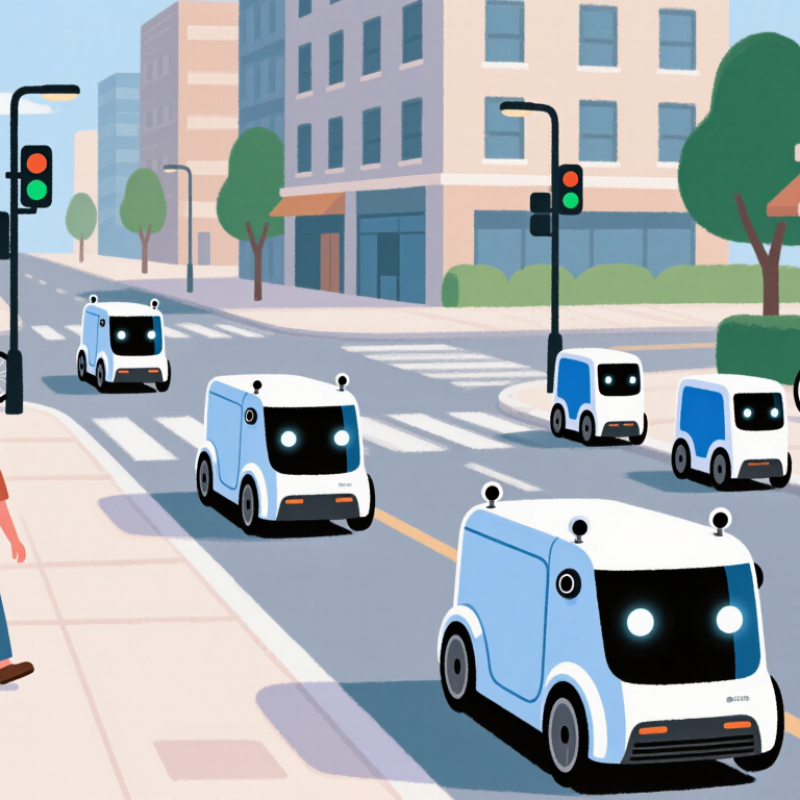
U.S. Census Bureau estimates put U.S. retail e-commerce sales at about $1.19 trillion in 2024, up from 2023. That figure represents millions of orders moving from warehouses and local stores to doorsteps. Each delivery adds pressure to the last mile, where short trips, traffic, and narrow delivery windows can make costs climb.
Autonomous delivery robots are drawing interest because they can handle some nearby, repeatable drop-offs. Picture a small robot crossing a campus sidewalk with groceries, or carrying a parcel along a quiet residential block. For retailers and delivery operators, these machines may help extend existing routes and reduce the need for a driver to complete every short trip. That gap matters.
But online sales do not translate directly into robot orders. Dense sidewalks, weather, building access, and customer expectations all shape whether a robot is useful. A robot may move smoothly on a mapped route, then wait while someone finds the right entrance. That detail is easy to overlook. Census figures show the scale of online retail, not how many deliveries robots will perform. Still, continued e-commerce growth gives companies a practical reason to test autonomous delivery in places where frequent, local drop-offs make sense.
| Data Dimension | 2024 U.S. Figure | What the Data Shows | Relevance to Autonomous Delivery Robots |
|---|---|---|---|
| Annual e-commerce sales | $1,192.6 billion | U.S. retail e-commerce sales reached approximately $1.19 trillion in 2024. | A larger online retail market increases the volume of orders that must move from local fulfillment points to customers. |
| E-commerce sales growth | 8.1% year over year | Annual e-commerce sales grew faster than total U.S. retail sales. | Continued growth can intensify demand for scalable local delivery capacity, including robots on suitable short routes. |
| Total retail sales growth | 2.8% year over year | The Census Bureau reported slower growth for total retail sales than for e-commerce sales. | The difference highlights the growing importance of fulfilling orders placed online, rather than only serving in-store shopping. |
| E-commerce share of retail | 16.1% | E-commerce accounted for 16.1% of total U.S. retail sales in 2024. | Online orders represent a substantial and growing fulfillment channel; robots can support deliveries in appropriate neighborhoods and campuses. |
| Growth-rate gap | 5.3 percentage points | Calculated as 8.1% e-commerce growth minus 2.8% total retail sales growth. | This gap illustrates why delivery networks may need to adapt as online retail expands faster than the broader retail market. |
| Last-mile operating context | Local, address-level fulfillment | E-commerce orders require goods to be delivered to individual customer destinations, rather than only to retail stores. | Autonomous robots may help with repeatable, short-distance routes, while weather, accessibility, local rules, and handoff requirements affect where they are practical. |
Source: U.S. Census Bureau, 2024 annual retail e-commerce estimates. The growth-rate gap is calculated from the reported annual growth rates. The robot relevance statements describe potential operational applications, not measured Census outcomes.
U.S. retail e-commerce sales reached about $1.19 trillion in 2024. More orders mean more trips from warehouses and local stores to doorsteps. That gap matters.
Small robots may handle repeatable trips, such as carrying groceries across a campus or parcels along a quiet block. They could extend existing routes.
No. The sales figure shows retail scale, not robot use. Building access, sidewalk conditions, weather, and customer expectations all affect demand.
A projection suggests city delivery vehicles could rise by 36% by 2030. Vans searching for curb space may block bike lanes or crowd loading zones.
They may replace some short vehicle trips between local hubs and nearby destinations. The result depends on where they operate. Not always.
Clear routes, accessible sidewalks, and safe crossings matter. A robot may follow its map, then pause while someone looks for the correct entrance.
They may add clutter or struggle with rain, construction, and crowded intersections. A stalled machine also needs a reliable response plan. This is not a clean fix.
No. The vehicle increase is a projection, not a certainty. Robots may help in some areas, but people still need room to move comfortably. It depends.
14, Raghava Enclave, Transport Road, Secunderabad, Hyderabad (500009)